Choosing a roll-off container is not just a question of ordering the biggest box available. The right size can help keep a construction or industrial site organized, make room for active work, and support a more predictable hauling plan. The wrong size can create avoidable interruptions: a container that fills too quickly, a footprint that crowds the work area, or a service schedule that does not match the pace of the job.
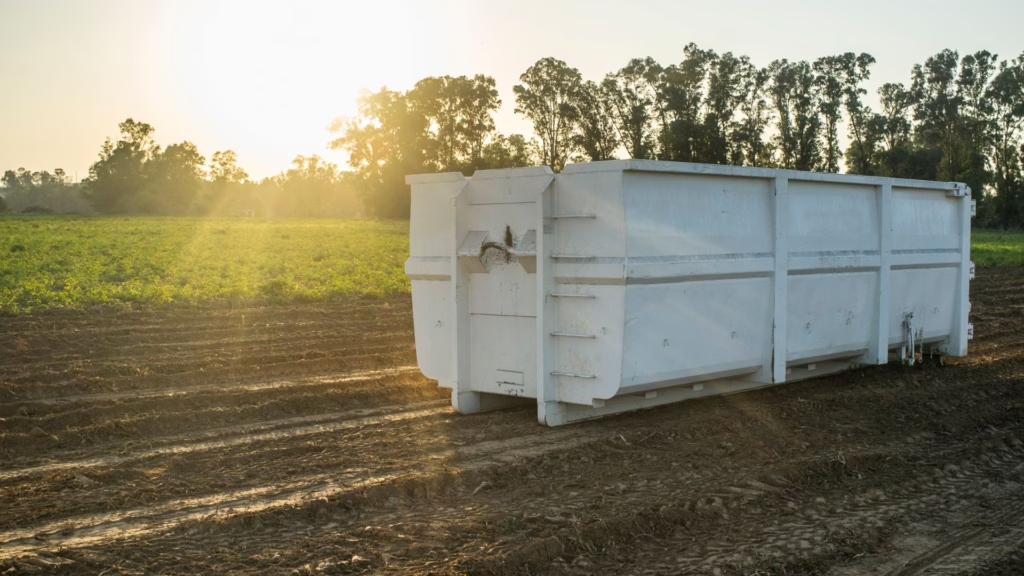
For contractors, project managers, developers, and facility teams seeking a roll-off dumpster rental Augusta GA, the most useful starting point is to estimate the waste stream, the pace of accumulation, available placement space, and whether materials will be handled as mixed debris or separated for recycling and diversion. Upstream Waste Solutions provides open-top and covered roll-off containers for construction and industrial jobsites, with container sizes generally ranging from 18 to 40 yards.
Start with the question: what size dumpster do I need?
There is no one-size answer, even for projects with a similar scope. An 18-yard container and a 40-yard container differ in how much material they can hold, but selection should also account for what is going into the container and how the site will operate around it.
Before requesting service, consider these practical questions:
- What materials will the job generate? Construction and industrial streams may include concrete, asphalt, metal, wood, green waste, drywall, cardboard, paper, plastics, masonry, and pallets, among other commodities.
- Will materials be mixed or separated? Separation can be useful when a project is pursuing recycling or diversion goals and when recoverable material streams are present.
- How quickly will debris accumulate? A short, intensive demolition phase may call for a different plan than a long build with steady, lower-volume material generation.
- Where can the container be staged? Think about equipment access, traffic flow, loading access, work-zone changes, and the room needed for delivery and pickup.
- Will the container need protection from weather or unauthorized dumping? Upstream offers both open-top and covered roll-off options.
- Does the project need diversion documentation? Projects pursuing LEED-related waste management objectives need a waste plan that considers material handling and reporting from the outset.
Answering these questions gives your waste partner the context needed to recommend a container arrangement that fits the job rather than simply assigning a size by guesswork.
Comparing 18-, 20-, 30-, and 40-yard roll-off containers
18-yard containers: a compact option within the roll-off range
An 18-yard roll-off is the smallest size in Upstream’s stated general container range. It can be a practical starting point when the work area has a tighter container location, the waste stream is manageable, or the project team prefers more frequent service over dedicating more space to a larger container.
This size deserves consideration when container placement is a major planning constraint. It may also suit phases of a project where crews want a designated point for a particular stream rather than a large, general-purpose accumulation area. The important point is to coordinate expected fill pace with pickup needs. A smaller container that is serviced at the right intervals can be more useful than a larger container that is poorly positioned or allowed to interfere with the site.
20-yard containers: a close alternative when needs are slightly greater
A 20-yard container sits just above the 18-yard option and may be appropriate when a team expects somewhat more volume but still needs to be mindful of staging space. It is worth comparing directly with an 18-yard container when the scope is near the line between the two.
Rather than choosing based on a small difference in size alone, review the work sequence. Are multiple trades about to produce debris at the same time? Is one phase ending before another begins? Can the container be placed where crews can reach it without disrupting deliveries or equipment movement? These operational details often determine whether a 20-yard option is the better fit.
30-yard containers: for projects with a larger debris plan
A 30-yard roll-off gives commercial and construction teams a larger container option without moving to the top of the available range. It can be worth discussing when the project has more sustained debris generation, more room for container staging, or a need to consolidate material handling rather than rely on a smaller container.
For a 30-yard container, placement planning becomes especially important. Identify a location that works for crews loading material, allows the site to maintain safe circulation, and remains accessible when pickup is needed. If project conditions will change as the build progresses, plan ahead for whether the container location or hauling schedule needs to change too.
40-yard containers: the largest generally available size
A 40-yard container is the largest size in Upstream’s stated general range. It may be a strong candidate for projects with substantial expected volume and a suitable area for staging and access. It is not automatically the best choice simply because it is the largest; the material stream, loading method, site layout, and service plan still matter.
Teams considering a 40-yard roll-off should be clear about how the container will be used throughout the project. If it will receive mixed construction and demolition debris, discuss the anticipated materials and diversion objectives. If it will serve one recurring commercial or industrial stream, discuss the accumulation pattern and pickup needs. A larger container works best as part of a deliberate waste-handling plan, not as a substitute for one.
Material type can affect the container plan
Volume is only one part of container selection. The material going into the roll-off also affects how a project should plan for hauling, recycling, and diversion. Concrete and asphalt are different material streams from cardboard, wood, metal, drywall, or pallets. Discussing the anticipated mix before delivery helps establish the right approach for the job.
Upstream handles commercial and construction waste streams through sorting, baling, material recovery, diversion, and transport to appropriate recycling or reuse outlets. Review the company’s materials handled information for a closer look at common streams. For additional context on construction and demolition materials management, the U.S. Environmental Protection Agency’s C&D materials guidance explains why source reduction, reuse, recycling, and proper management all matter.
Where recoverable materials are involved, rebates may be available depending on the material stream and market conditions. They are not guaranteed, so it is best to ask about the specific materials your project expects to generate.
Plan container size alongside recycling and LEED goals
If a project is pursuing LEED requirements or another diversion-focused objective, container planning should begin early. A container that receives a broad mixture of materials may be handled differently from a planned approach that considers sorting and documentation. Upstream supports material diversion, mixed-load sorting, and reporting, with a dedicated LEED coordinator handling paperwork and reporting for applicable projects.
Learn more about LEED recycling support and how waste documentation can fit into the project’s broader plan. LEED is administered by the U.S. Green Building Council; Upstream supports projects pursuing its waste-management-related requirements but does not award LEED certification.
Get a recommendation based on your actual jobsite
The practical choice between an 18-, 20-, 30-, or 40-yard roll-off comes down to the materials, project phase, site access, and expected hauling needs. Explain your scope, anticipated debris, timeline, and placement constraints when requesting a roll-off dumpster rental Augusta GA. Upstream Waste Solutions serves construction and industrial operations across the CSRA and surrounding areas in Georgia and South Carolina, with customizable hauling and recycling programs for single jobsites and multi-location needs.
Visit Roll-Off Containers and Hauling to discuss available options and build a container plan that supports the way your jobsite actually works.