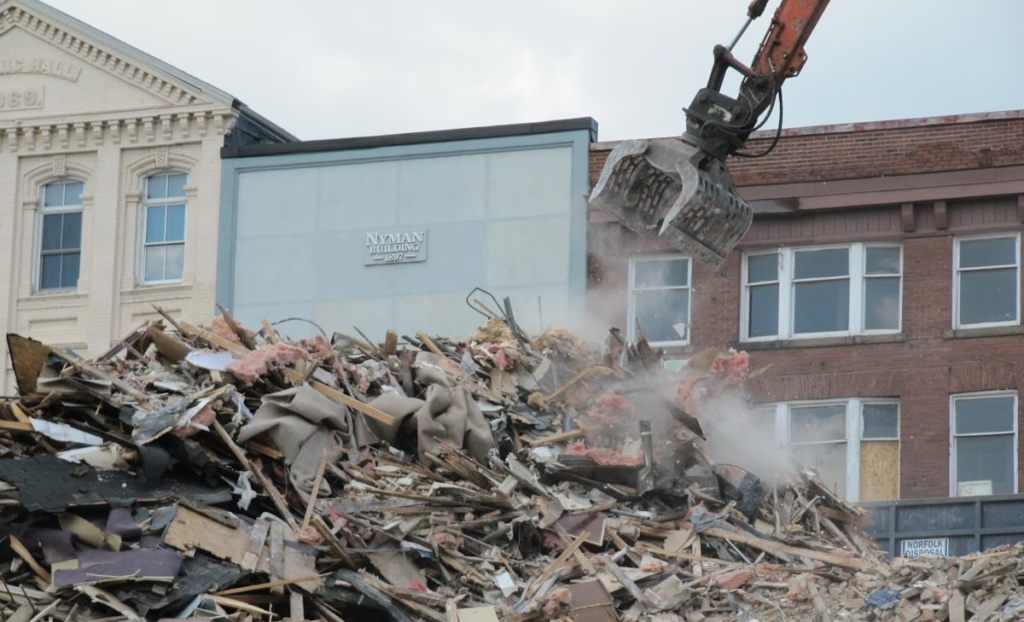
A demolition job throws off an astonishing amount of stuff. Concrete, twisted metal, snapped lumber, busted drywall, a mountain of it in a single dumpster. The easy assumption is that all of it heads straight to the landfill. A surprising share of it does not have to.
Good construction debris removal is not just renting a dumpster and hauling everything to the dump. Construction and demolition waste, or C&D, is one of the most recyclable waste streams there is. The trick is knowing what can be pulled out and given a second life versus what genuinely belongs in the ground. Sorting it right keeps usable material out of the landfill, and it often costs less than burying everything..
What construction materials actually get recycled?
More than most people expect, starting with the heavy stuff. Concrete, brick, and asphalt can be crushed and reused as road base, fill, or aggregate for new concrete. That alone is a huge chunk of a typical demolition load by weight.
Metal is the other big winner. Steel beams, rebar, copper wire, aluminum, and old appliances all carry real scrap value and get recycled at high rates. Clean wood can be chipped into mulch or processed into engineered products. Cardboard and clean packaging from a build recycle easily too. Pull those four out and you have already diverted most of the pile.
What about drywall and shingles?
These are the in-between materials, and it comes down to condition. Clean, unpainted drywall scrap can often be recycled, since the gypsum inside gets reused in new board or even spread on farm fields. Drywall that is painted, wet, or studded with fasteners is a harder case.
Asphalt shingles are similar. In many areas, tear-off shingles get ground up and mixed into pavement, which keeps a heavy, bulky material out of the landfill. Whether that happens depends on local processing, so it is worth asking your hauler what is actually possible in your area.
So what really goes to the landfill?
The mixed, the contaminated, and the genuinely spent. When debris is all jumbled together, soaked, or coated in something that cannot be separated cheaply, it usually heads to the landfill because sorting it is no longer practical. Contamination is the enemy of recycling.
Some materials belong there anyway, or need special handling. Treated and painted lumber, certain insulation, broken ceramics, and some plastics often have no good recycling path. Hazardous materials like asbestos are a separate category entirely and call for careful, regulated disposal, never the regular dumpster.
Why does sorting on the job site matter so much?
Because a clean pile recycles and a mixed pile does not. The single biggest factor in how much gets diverted is whether materials are separated before they all get crushed together. Concrete in one place, metal in another, wood in a third, and the recyclable rate jumps. Even a couple of labeled containers on site instead of one giant catch-all makes a measurable difference by the end of a job.
That is also where the savings live. Landfill tipping fees add up quickly, and diverting heavy material like concrete and metal can lower the total bill for a project. A hauler who sorts and routes material to the right place does more than help the environment. They often save the job money.
How do you handle construction debris removal the right way?
You do not have to know every waste stream by heart. You just need the right containers and a partner who knows where each material should go. Whether it is a small remodel or a full commercial construction cleanup, the same principle holds: separate at the source, find recycling outlets for what qualifies, and handle the rest responsibly.
Done well, a demolition or renovation can keep a large share of its debris out of the landfill without slowing the job down. That is better for the budget and better for the community the project sits in. The dumpster does not have to be a one-way trip to the landfill.
Upstream Waste Solutions serves the entire CSRA, the Central Savannah River Area, and most of the surrounding communities. Planning a build, a teardown, or a big renovation? Set up construction debris removal with Upstream Waste Solutions and keep more of your debris out of the landfill.